
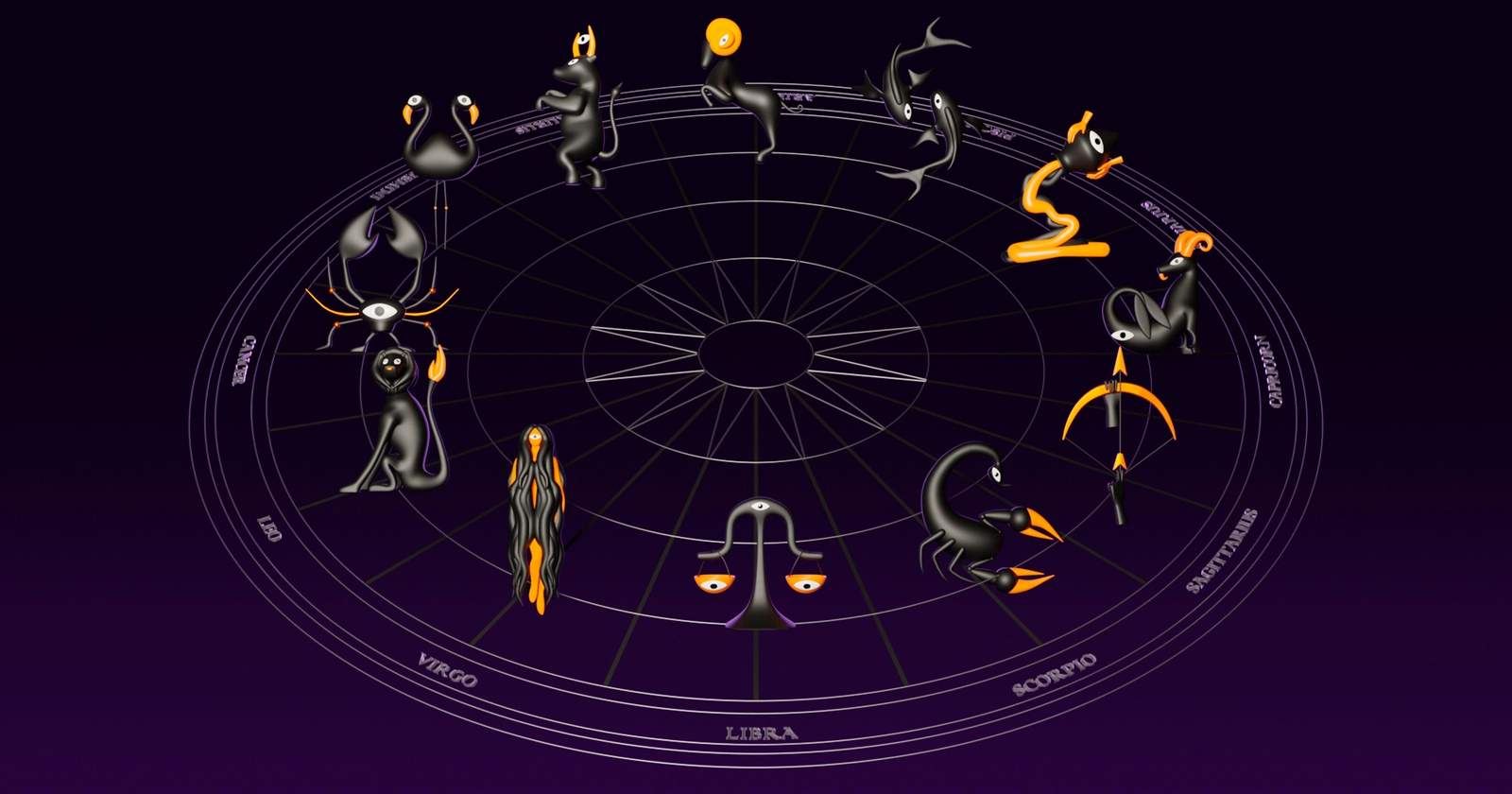
Ask almost anyone interested in astrology what their sign is, and they’ll usually answer with their Sun sign:
“I’m a Scorpio.”
“I’m a Leo.”
“I’m a Capricorn.”
But professional astrologers rarely stop there.
In real chart interpretation, your zodiac sign is only one layer of a much larger symbolic system. Two people born under the same Sun sign can have radically different personalities, relationship patterns, emotional needs, and life paths.
Why?
Because astrology is not built on signs alone.
To understand a birth chart accurately, you need to understand three things working together:
- Planets → what energy is operating
- Zodiac signs → how that energy behaves
- Astrology houses → where that energy appears in life
This is the missing context behind why generic horoscopes often feel vague or only partially accurate.
A Taurus may not seem “calm and grounded.”
A Gemini may hate socializing.
A Cancer may appear emotionally distant.
At first glance, those examples sound contradictory. But once you study house placements, rising signs, and planetary combinations, those contradictions start making sense.
This guide goes beyond simplified “pop astrology” and explains how signs and houses actually function inside a birth chart. You’ll also see real chart examples, historical context, and practical ways to apply astrology to self-awareness, relationships, and decision-making.
Astrology Is Older and More Complex Than Modern Horoscopes
Modern horoscope culture tends to reduce astrology into personality labels:
- Aries = angry
- Taurus = stubborn
- Gemini = two-faced
- Scorpio = intense
But astrology historically developed as a much more sophisticated symbolic system.
Ancient astrologers in Mesopotamia, Hellenistic Egypt, Persia, India, and later medieval Europe used astrology to analyze:
- Personality
- Timing cycles
- Relationships
- Career direction
- Political events
- Agriculture
- Health patterns
- Psychological tendencies
The newspaper-style Sun sign horoscope most people know today only became popular in the 20th century.
Traditional astrology always relied on full chart interpretation — not just one sign.
That full-chart approach is where houses become essential.
What Zodiac Signs Actually Represent
The zodiac signs describe qualities of expression.
Each sign is a symbolic style through which planetary energy operates.
For example:
- Mars represents drive and action.
- Venus represents attraction and relationships.
- Mercury represents communication and thought.
But those planets behave differently depending on the sign they occupy.
Example:
Mars in Aries
Direct, impulsive, competitive, fast-moving.
Mars in Capricorn
Controlled, strategic, disciplined, patient.
Same planet.
Different style of expression.
That’s what zodiac signs do: they shape the behavior of energy.
The 12 Zodiac Signs and Their Core Archetypes
Aries — The Initiator
Bold, instinctive, action-oriented.
Aries energy pushes forward quickly and prefers movement over hesitation.
Strengths
- Courage
- Leadership
- Initiative
Challenges
- Impatience
- Impulsiveness
- Conflict-prone behavior
Taurus — The Builder
Grounded, stable, sensory-oriented.
Taurus seeks consistency, comfort, and long-term security.
Strengths
- Reliability
- Patience
- Loyalty
Challenges
- Resistance to change
- Possessiveness
- Stubbornness
Gemini — The Communicator
Curious, adaptable, mentally active.
Gemini thrives through information, learning, and conversation.
Strengths
- Versatility
- Intelligence
- Communication skills
Challenges
- Restlessness
- Inconsistency
- Mental overload
Cancer — The Protector
Emotional, nurturing, intuitive.
Cancer energy seeks emotional security and meaningful connection.
Strengths
- Empathy
- Loyalty
- Emotional intelligence
Challenges
- Moodiness
- Withdrawal
- Emotional defensiveness
Leo — The Creator
Expressive, charismatic, identity-driven.
Leo energy wants to create, shine, and leave an impact.
Strengths
- Confidence
- Creativity
- Generosity
Challenges
- Pride
- Validation-seeking
- Dramatic tendencies
Virgo — The Analyst
Precise, practical, improvement-focused.
Virgo seeks order, usefulness, and refinement.
Strengths
- Attention to detail
- Discipline
- Analytical thinking
Challenges
- Overthinking
- Perfectionism
- Self-criticism
Libra — The Harmonizer
Diplomatic, relational, aesthetically aware.
Libra seeks balance between self and others.
Strengths
- Charm
- Fairness
- Social intelligence
Challenges
- Indecisiveness
- People-pleasing
- Conflict avoidance
Scorpio — The Transformer
Intense, psychologically deep, emotionally powerful.
Scorpio energy seeks truth beneath the surface.
Strengths
- Emotional depth
- Resilience
- Focus
Challenges
- Control issues
- Suspicion
- Obsessiveness
Sagittarius — The Explorer
Expansive, philosophical, freedom-seeking.
Sagittarius seeks meaning through experience.
Strengths
- Optimism
- Vision
- Curiosity
Challenges
- Restlessness
- Bluntness
- Commitment avoidance
Capricorn — The Strategist
Ambitious, disciplined, responsibility-oriented.
Capricorn builds long-term structures and goals.
Strengths
- Persistence
- Leadership
- Self-control
Challenges
- Emotional suppression
- Workaholism
- Rigidity
Aquarius — The Innovator
Independent, unconventional, future-focused.
Aquarius seeks progress, originality, and collective change.
Strengths
- Innovation
- Visionary thinking
- Independence
Challenges
- Emotional detachment
- Rebellion for its own sake
- Contrarian behavior
Pisces — The Mystic
Imaginative, intuitive, emotionally porous.
Pisces dissolves boundaries and absorbs emotional environments deeply.
Strengths
- Compassion
- Creativity
- Spiritual insight
Challenges
- Escapism
- Confusion
- Emotional overwhelm
The Elements: Why Some Signs Naturally Understand Each Other
Astrology groups signs into four elemental categories.
Fire Signs
Aries, Leo, Sagittarius
Associated with:
- Inspiration
- Passion
- Action
Fire signs tend to move instinctively and energetically.
Earth Signs
Taurus, Virgo, Capricorn
Associated with:
- Stability
- Practicality
- Material reality
Earth signs seek structure and reliability.
Air Signs
Gemini, Libra, Aquarius
Associated with:
- Thought
- Communication
- Social exchange
Air signs process life intellectually.
Water Signs
Cancer, Scorpio, Pisces
Associated with:
- Emotion
- Intuition
- Psychological depth
Water signs process life emotionally and instinctively.
What Astrology Houses Actually Represent
If signs describe qualities, houses describe life arenas.
The houses show where planetary energy becomes visible in lived experience.
This is one of the most important concepts in astrology.
Imagine signs as actors.
Houses are the stages where those actors perform.
Without houses, astrology loses context.
Why Birth Time Matters So Much
Your house placements depend on:
- Exact birth time
- Birth location
- Earth’s rotation
Even a two-hour difference can significantly change:
- Rising sign
- House placements
- Chart emphasis
This is why accurate birth data matters in professional astrology.
The 12 Astrology Houses Explained in Real Life
1st House — Identity and Presence
How you enter the world.
Strong 1st House placements often create noticeable personalities or strong self-awareness.
2nd House — Money, Stability, and Self-Worth
Not just finances.
This house also reveals:
- Personal values
- Resource management
- Security needs
3rd House — Communication and Mental Patterns
Associated with:
- Speaking
- Writing
- Learning
- Siblings
- Daily environment
Writers and educators often have strong 3rd House activity.
4th House — Home and Emotional Foundations
This house reveals:
- Family dynamics
- Emotional roots
- Private life
- Psychological security
A heavily activated 4th House often indicates strong attachment to home or ancestry.
5th House — Creativity and Pleasure
The house of:
- Romance
- Art
- Performance
- Joy
- Self-expression
Actors, performers, and artists frequently show strong 5th House signatures.
6th House — Work, Routine, and Health
This house governs:
- Daily habits
- Discipline
- Service
- Physical maintenance
Strong 6th House people often feel psychologically better with structure.
7th House — Relationships and Partnership
Marriage, contracts, alliances, and interpersonal dynamics.
This house often reveals what qualities someone unconsciously seeks in others.
8th House — Transformation and Shared Power
Traditionally associated with:
- Intimacy
- Shared resources
- Psychological transformation
- Loss and rebirth
This house is often misunderstood as merely “dark,” but it also represents profound emotional evolution.
9th House — Philosophy and Expansion
Associated with:
- Higher education
- Spirituality
- Travel
- Belief systems
Strong 9th House placements often create seekers and lifelong learners.
10th House — Career and Public Identity
One of the most visible houses.
Associated with:
- Ambition
- Reputation
- Achievement
- Public standing
People with strong 10th House placements often feel driven toward recognition or mastery.
11th House — Community and Collective Vision
Friendships, networks, audiences, and long-term aspirations.
Modern digital creators often show strong 11th House activity.
12th House — The Hidden Inner World
The most psychologically complex house.
Associated with:
- Solitude
- Spirituality
- Dreams
- Healing
- The unconscious mind
Strong 12th House placements often indicate heightened intuition and deep inner processing.
How Signs and Houses Work Together
This is where astrology becomes truly interpretive.
Example:
Venus in Libra in the 10th House
- Venus = attraction, relationships, aesthetics
- Libra = harmony, diplomacy, beauty
- 10th House = career and public image
Interpretation
This person may:
- Build careers through charm or aesthetics
- Thrive in public-facing roles
- Be perceived as graceful or socially polished
- Succeed in diplomacy, branding, design, fashion, or media
Now compare that with:
Venus in Libra in the 4th House
The same Venus-Libra energy becomes more private and emotionally rooted.
This person may:
- Prioritize domestic harmony
- Create beautiful living spaces
- Seek emotional peace within family life
- Express affection through caregiving and emotional comfort
Same sign.
Same planet.
Different house.
Completely different life expression.
Why Generic Horoscopes Often Feel Wrong
Most horoscope content uses only Sun signs.
But astrology interpretation depends on:
- House placements
- Planetary aspects
- Rising sign
- Moon sign
- Timing techniques
- Planetary rulerships
That complexity explains why many people partially relate to their sign but not entirely.
A shy Leo.
An emotionally detached Cancer.
A highly organized Sagittarius.
These contradictions become understandable once the entire chart is examined.
The Debate Around House Systems
One of astrology’s oldest debates involves how houses should be calculated.
Different astrologers use different systems, including:
- Whole Sign
- Placidus
- Equal House
- Porphyry
- Koch
Whole Sign Houses
Used heavily in traditional astrology.
Each zodiac sign becomes an entire house.
Simpler and historically older.
Placidus Houses
The most common modern Western system.
Uses time-based calculations and produces uneven house sizes.
Popular in psychological astrology.
Which House System Is “Correct”?
Astrologers disagree.
Some practitioners believe:
- Whole Sign works better for prediction
- Placidus works better psychologically
Others use multiple systems simultaneously.
This disagreement is important because it shows astrology is not a rigid monolith. Serious astrology contains interpretation traditions, philosophical schools, and methodological debates — not just social media memes.
A Real-World Chart Comparison
Consider two people with:
- Scorpio Sun
- Virgo Moon
- Capricorn Rising
Even they may differ dramatically depending on house emphasis.
Person A
Multiple planets in the 10th House.
Likely focused on:
- Career
- Achievement
- Public recognition
Person B
Multiple planets in the 4th and 12th Houses.
Likely more inwardly focused:
- Emotional healing
- Family dynamics
- Spiritual development
- Privacy
This is why reducing astrology to Sun signs oversimplifies human complexity.
How to Begin Reading Your Own Chart
Step 1: Get Accurate Birth Data
Birth time matters enormously.
Without it, house placements may be inaccurate.
Step 2: Identify the “Big Three”
Start with:
- Sun sign
- Moon sign
- Rising sign
These form the foundation of personality interpretation.
Step 3: Look for Repeating Themes
Astrology becomes more convincing when patterns repeat.
For example:
- Multiple Capricorn placements
- Heavy 10th House emphasis
- Saturn dominance
Repeated symbolism usually indicates major life themes.
Step 4: Avoid Literal Thinking
Astrology is symbolic language, not deterministic fate.
A placement can express itself in many ways depending on:
- Environment
- Culture
- Personal choices
- Maturity level
Final Thoughts
Zodiac signs and astrology houses are not interchangeable concepts.
Signs describe how energy behaves.
Houses describe where that energy unfolds in life.
When planets, signs, and houses are interpreted together, astrology becomes far more nuanced, psychologically insightful, and personally relevant.
That’s the difference between reading a generic horoscope and understanding an actual birth chart.
And once you begin studying the chart as an interconnected system rather than isolated personality labels, astrology starts revealing something much deeper than stereotypes: patterns of motivation, growth, conflict, relationships, and lived experience that are unique to each individual.